An introduction to Ignition — and the quiet change that just modernised it
It’s 2 a.m. in a control room somewhere. One screen glows in the dark — a map of pumps, tanks, and flow rates for the plant that cleans a city’s drinking water. An engineer on the night shift notices a reading drifting, reaches for the keyboard, and nudges a setting. The number settles. She moves on.
That screen has a name. Engineers call it an HMI — a human-machine interface — and the software behind it is called SCADA: the system that watches and controls physical infrastructure. The clean water at your tap. The power flowing to your street. The line in a factory bottling what’s in your fridge. You never see it, but a version of it is running near you right now.
So what is Ignition?
One of the most widely used tools for building those screens is a platform called Ignition, made by a company named Inductive Automation. Think of it as the workshop where engineers assemble the dashboards, alarms, and controls that run a plant — the thing that turns a wall of pipes and sensors into a screen a person can actually operate.
Ignition is quietly everywhere. And for most of its life it shared one habit with the rest of its industry — a habit nobody thought to question.
The quiet problem nobody talked about
Go back to that 2 a.m. change. The engineer nudged a setting and moved on. But where did that change go?
For thirty years, the answer was: into the system, and nowhere else. No record of what changed, who changed it, or why. No way to compare today’s screen with last month’s. No easy way to undo a mistake.
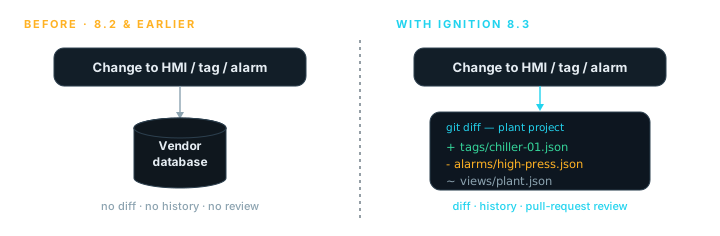
You can guess where that leads. We’ve walked into sites where two identical plants — same equipment, same software — had slowly drifted apart, because every small change over the years was made by hand, by whoever was on shift, with nothing connecting them. When something broke, the honest answer to “what changed?” was often a shrug.
Software teams solved this two decades ago. They keep every change to their work in a system that records who did what and when, and lets them undo anything — a kind of endless track-changes-and-history for the thing they’re building. The plant floor never had that. The prevailing wisdom was that industrial software is “different,” and those tools didn’t belong here.
The quiet change
In its latest release — version 8.3 — Ignition did something small that turns out to be a big deal. It started saving the entire project as ordinary files.
That sounds boring. Here’s why it isn’t.
Once a project is just files, all the things software teams take for granted suddenly apply to the plant floor too. Every change becomes something you can see, compare, review, and undo. A second engineer can look over a change before it goes live. A bad edit can be rolled back in seconds. And two sites can be kept perfectly, automatically identical.
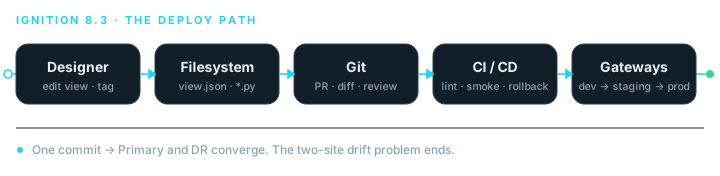
What makes this genuinely notable isn’t that it’s possible — a couple of other vendors offer versions of it. It’s that Ignition built it into the ordinary upgrade path of the plants already running today, instead of hiding it in a separate, brand-new product. The systems out in the field get to keep up.
Why we find this exciting
There’s one more reason this matters, and it’s the one we think about most.
Once these systems are made of readable files instead of a sealed black box, modern software — including AI — can finally help with them. A tool can read the whole project, point out an alarm that’s been quietly misbehaving for weeks, or draft a change for an engineer to approve. For years, “AI for industry” mostly meant slideshows. The path to AI that actually touches the systems running our buildings runs straight through this unglamorous change: turning the plant floor into something software can read.
It’s early, and it’s rough in places. But the direction is set — and it’s the direction we build in. If your team is planning how the next five years of your operations will run, this is worth understanding before you decide to keep doing things the old way. The payoff on the other side is simple: the people who run our buildings and factories finally get to use the same everyday tools the rest of the software world has had for twenty years.